Maintaining Your Ram 3500 Cummins Diesel: Service & Maintenance Schedule
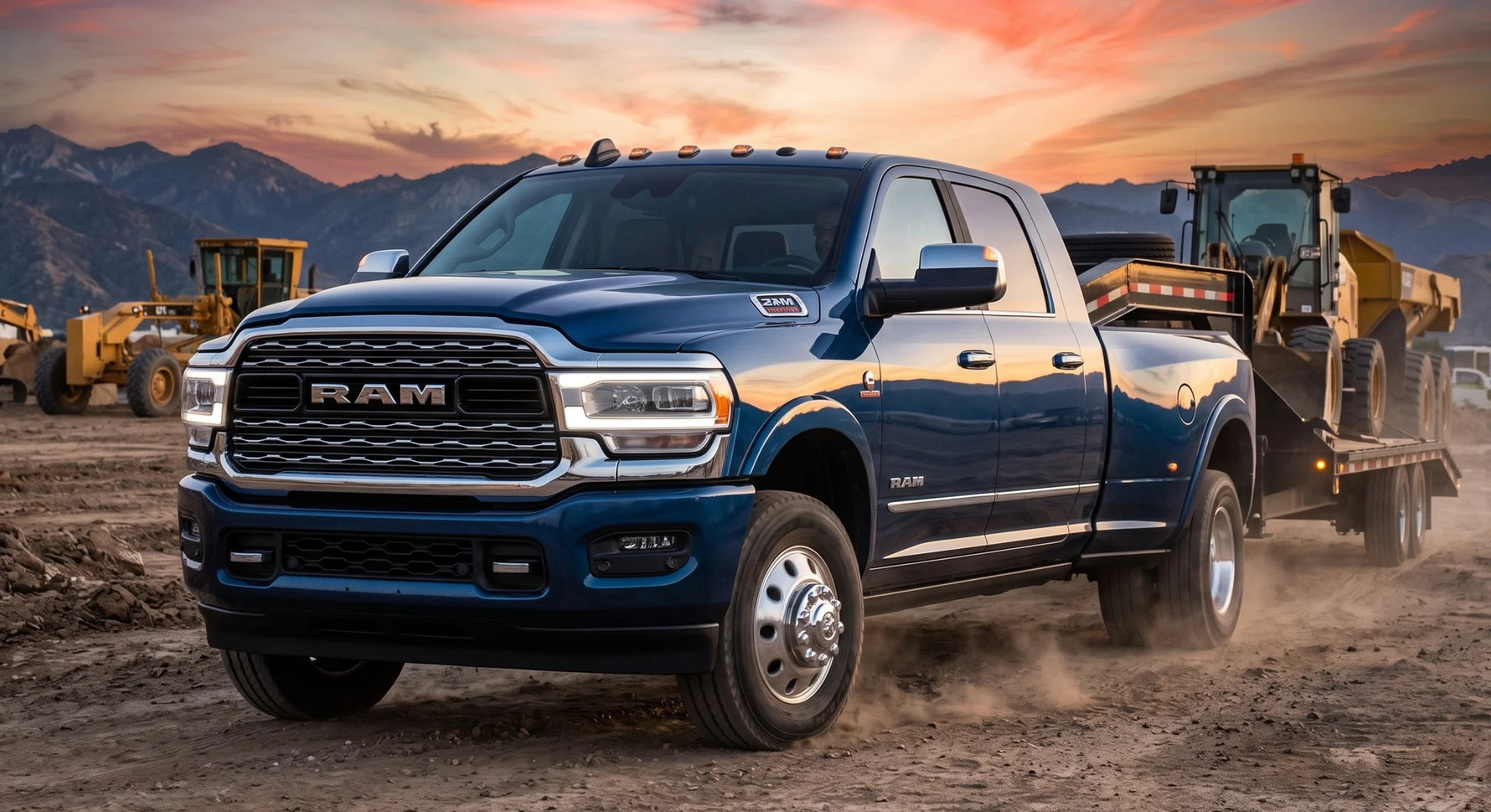
Owning a Ram 3500 means running one of the most capable heavy-duty diesels on the road. Its available high-output 6.7-liter Cummins turbo-diesel inline-six makes up to 430 horsepower and 1,075 lb-ft of torque, paired with a TorqueFlite HD eight-speed automatic transmission. Getting the most from that hardware comes down to one thing: consistent preventive maintenance. That matters even more under heavy towing and Southern California’s temperature swings.
At Jeep Chrysler Dodge RAM of Ontario, our factory-trained technicians service commercial-grade Cummins diesels every day. Routine scheduled maintenance is the owner’s responsibility. Keeping a relationship with an authorized Ram service department is one of the best ways to protect your investment. To bring your truck in or plan a service visit, use the buttons above.
Recommended Maintenance Schedule for the Ram 3500 Cummins
How often should you service your diesel truck? Under normal driving, your truck’s oil change indicator manages the schedule. The ceiling is 15,000 miles or 12 months, whichever comes first. The system watches real operating conditions and prompts service earlier when needed. Always follow the dash indicator and your owner’s manual rather than mileage alone.
That service covers the engine oil and filter, the dual fuel-filter system, a tire rotation, and a multipoint inspection. The dual fuel-filter setup pairs a chassis-mounted water separator with an engine-mounted secondary filter. Clean fuel is critical on a high-pressure common-rail diesel. It protects the injection system from water and debris. Confirm exact filter intervals in your owner’s manual, since they shorten with fuel quality and duty cycle.
| Service Item | Normal-Duty Interval | Under Severe Duty |
|---|---|---|
| Engine oil & filter | Up to 15,000 mi / 12 months, per the oil change indicator | As often as every 4,000 mi in dusty or heavy-idle use |
| Dual fuel filters (water separator + secondary) | Serviced on the maintenance schedule — confirm interval in owner’s manual | Sooner with poor fuel quality or heavy towing |
| Tire rotation & multipoint inspection (brake linings, front suspension, transfer case & axle fluids) | At each oil-change service | Inspect more frequently under severe duty |
| Crankcase Ventilation (CCV) filter | Around every 75,000 mi (2019-and-newer 6.7L Cummins) | Replace sooner if the dash shows a “Perform Service” message |
Staying on top of these milestones is the single most effective way to avoid costly, unscheduled repairs. When your truck is approaching its next interval, book your appointment using the scheduling button.
Understanding the CCV Filter and Severe-Duty Intervals
Are you running your truck in conditions that demand more attention? Many diesels live in severe-duty service. That includes frequent idling, short trips where the engine never fully warms up, dusty or off-road use, and towing heavy trailers near capacity. Under the most demanding dusty or heavy-idle conditions, oil and filter changes may be needed as often as every 4,000 miles. Shorter intervals limit oil dilution and soot buildup.
Another component needs periodic replacement: the Crankcase Ventilation (CCV) filter. It captures oil mist and blow-by gases from the crankcase and routes cleaner air back to the intake. On 2019-and-newer 6.7-liter Cummins engines, plan to replace it around every 75,000 miles. Replace it sooner if the dash shows a “Perform Service” message. A neglected CCV filter can raise crankcase pressure. Over time, that can cause oil leaks, turbocharger oil-seal issues, or emissions-sensor faults.
For owners near Norco who regularly tow heavy trailers, the severe-duty intervals are the right baseline. Staying on schedule prevents premature wear and keeps the truck’s towing capability intact.
Diesel Emissions Systems and Genuine OEM Parts
Modern diesel powertrains rely on precisely calibrated emissions hardware. That includes the Diesel Exhaust Fluid (DEF) and selective catalytic reduction (SCR) system and its sensors. Because these systems depend on tight calibration, genuine OEM parts help prevent trouble codes and premature part failure. Our dealership keeps a stocked OEM parts center. Our parts specialists can help you find the correct filters, fluids, and components for any maintenance task, protecting your fuel injection and exhaust aftertreatment systems.
Can I Perform My Own Cummins Service and Keep the Warranty?
Can you handle your own oil changes and fuel-filter replacements without risking factory coverage? Generally, yes. Under the Magnuson-Moss Warranty Act (15 U.S.C. §§ 2301–2312), a manufacturer cannot void your warranty simply because you did your own maintenance or used an independent shop. Still, if a covered failure is traced to improper maintenance, the wrong fluids, or a poorly installed part, the manufacturer can deny that specific claim.
The Cummins diesel in the Ram 3500 is covered under Ram’s powertrain limited warranty. To keep that protection intact while doing your own work, follow a few best practices:
- Save every receipt for oil, filters, and fluids.
- Log the mileage, date, and type of each service.
- Use fluids and filters that meet or exceed Chrysler and Cummins specifications.
- Avoid aftermarket engine or emissions tunes, which can void coverage for any related damage.
For many owners, having a factory-certified dealership document each visit is worth the peace of mind. Our team can help you keep a complete service record on file.
Quick Answers Before You Visit
Does our dealership have certified diesel mechanics on-site?
Yes. We maintain factory-trained technicians who specialize in Cummins diesel engines and commercial-grade Ram trucks, with the heavy-duty lifts and diagnostic tools needed to service dual-rear-wheel trucks and diesel emissions systems.
What is the warranty coverage on the Ram 3500 diesel engine?
For 2026-and-newer trucks, the Cummins turbo-diesel Ram 3500 is covered by a 10-year/100,000-mile powertrain limited warranty for the original owner, covering major engine and drivetrain components. Second and subsequent owners have powertrain coverage under the 5-year/60,000-mile New Vehicle Limited Warranty (5-year/100,000-mile for the diesel engine). Coverage terms vary by configuration, so consult your Warranty Information booklet for specifics.
What are the primary cab and bed configurations for the Ram 3500?
The truck is offered in Regular Cab, Crew Cab, and Mega Cab body styles. Regular Cab models come with an 8-foot bed. Crew Cab models offer a 6-foot-4-inch bed or an 8-foot bed, and Mega Cab models use the 6-foot-4-inch bed.
What is the fuel economy of a diesel Ram 3500?
Because the Ram 3500 has a Gross Vehicle Weight Rating over 8,500 pounds, it falls outside the EPA’s fuel-economy labeling requirements. As a result, there is no official EPA estimate. Real-world efficiency varies widely with payload, towing, and driving habits.
What safety features help with towing on the Ram 3500?
Adaptive Cruise Control and Forward Collision Warning with pedestrian emergency braking are standard. Both work even with a trailer attached. Available systems include Blind-Spot Monitoring with trailer coverage, LaneSense Lane Departure Warning, and a 360-degree Surround-View Camera for tight maneuvering and trailer hitching.
Schedule Your Ram 3500 Service in Ontario
Maintaining a heavy-duty truck takes the right expertise, parts, and equipment. Whether your Cummins diesel needs routine oil and fuel-filter service, a CCV filter replacement, or severe-duty diagnostics, our factory-certified service center uses genuine OEM parts. For more guidance, browse our Ram service and parts tips or review our 2026 Ram diesel maintenance schedule.
Breakdowns happen. Chrysler, Dodge, Jeep, and Ram vehicles within the factory warranty period include roadside assistance. Call 1-800-521-2779 for manufacturer-approved towing to an authorized facility. To reach our team directly, contact our service department or call Service at 909-321-9772.
Disclaimers
The information in this article is general guidance and does not constitute a specific diagnostic or repair recommendation for any individual vehicle. Repair and maintenance decisions should be made in consultation with a certified technician based on the specific condition of your vehicle.
This information is provided for general educational purposes only and does not constitute legal advice. Warranty coverage depends on the specific terms of your vehicle’s warranty agreement. Consult your owner’s manual or a qualified legal professional for guidance on your individual situation.
EPA-estimated fuel economy figures are for comparison purposes only. Your actual mileage will vary depending on driving conditions, how you drive and maintain your vehicle, battery age/condition, and other factors.
Driver-assist and safety systems are supplemental aids and are not a substitute for safe, attentive driving. Their effectiveness depends on weather, road, and traffic conditions and other factors. Always obey traffic laws and stay attentive to the road. See your owner’s manual for system details and limitations.