Summer Maintenance Checklist for the 2026 Ram 1500
The 2026 Ram 1500 delivers serious capability with its available 3.0L Hurricane twin-turbo inline-six engine, and keeping it performing at its best through the summer requires focused maintenance. High temperatures across Ontario, CA, and the Inland Empire place added stress on your truck’s cooling, electrical, and drivetrain systems — and the Hurricane’s twin turbochargers are especially sensitive to oil quality and clean air intake under heat. A thorough summer maintenance routine protects both your investment and your driving experience during the hottest months of the year.
Explore the full capabilities of the 2026 Ram 1500 to understand what makes this truck a standout in the full-size pickup segment.
Summer Maintenance Quick Reference
| Maintenance Area | What to Check | Summer Priority |
|---|---|---|
| Cooling System | Coolant level, hoses, radiator fins, connections | High — overheating risk rises sharply |
| Air Conditioning | Refrigerant levels, leaks, cabin air filter | High — daily comfort and driver alertness |
| Engine Air Filter | Debris, restriction, contamination | High — critical for turbo engine health |
| Tires | Pressure (cold), tread depth, sidewall cracks, rotation | High — heat increases blowout risk |
| Engine Oil | Level, condition, correct spec for your engine variant | High — protects turbo bearings under heat |
| Brakes | Pads, rotors, fluid level, moisture contamination | Medium-High — towing increases brake stress |
| Battery | Terminals, corrosion, charge level, alternator output | Medium-High — heat accelerates fluid loss |
| Belts and Hoses | Cracking, blistering, soft spots, wear | Medium — rubber degrades faster in heat |
| Wiper Blades | Streaking, skipping, cracked rubber | Medium — UV and dust harden blades |
| Lighting | Headlights, brake lights, turn signals | Standard — verify all systems operational |
Cooling System Inspection
Start your summer checklist with the cooling system. Engine overheating can cause significant damage to the Hurricane’s twin-turbo components, and summer temperatures in the Inland Empire regularly push past 100°F. Check the coolant level and condition regularly, ensuring it meets the manufacturer’s specifications with the correct mixture of antifreeze and water. Inspect hoses, the radiator, and all connections for leaks — even minor leaks can escalate into costly repairs. Keep the radiator fins clear of debris to maximize airflow, which is especially important in areas like Norco, CA, where dust from the area’s equestrian properties can accumulate on cooling components.
Air Conditioning Performance
Your A/C system will run hard all summer in the Inland Empire’s heat. Ensure refrigerant levels are adequate and the system is free of leaks. A properly functioning air conditioner reduces driver fatigue during long drives around Corona and Riverside. Inspect the cabin air filter and replace it if clogged — restricted airflow reduces both cooling efficiency and air quality inside the cab.
Engine and Cabin Air Filters
Air filter condition is especially important on the 2026 Ram 1500’s turbocharged Hurricane engine. The twin turbochargers depend on unrestricted, clean air intake to perform efficiently, and a clogged engine air filter forces the engine to work harder while potentially allowing contaminants past the filtration system. In dusty environments like the Inland Empire, inspect the engine air filter more frequently than the standard interval — every 6,000 to 10,000 miles rather than waiting for the standard 20,000- to 30,000-mile replacement cycle.
The cabin air filter should be replaced approximately every 12,000 miles on Hurricane-equipped models. A clean cabin filter improves both A/C efficiency and the quality of air circulating through the cab — especially valuable during summer months when dust, pollen, and particulates are at their highest.
Tire Pressure, Condition, and Rotation
Heat causes tire pressure to increase, which can lead to uneven wear, blowouts, or reduced traction. Check tire pressure when tires are cold and adjust according to the specifications on the tire placard located on the driver’s door jamb — the recommended PSI varies by trim and tire configuration on the 2026 Ram 1500, so there is no single universal number. Inspect tire tread for wear patterns and depth, as worn tires compromise handling and braking performance on hot pavement. Examine sidewalls for cracks or damage from heat exposure, and top off windshield washer fluid to keep visibility clear in dusty summer conditions.
Ram recommends rotating tires every 6,000 to 8,000 miles to promote even tread wear across all four tires. If your truck is due for a rotation, scheduling it alongside other summer maintenance keeps everything on track.
Brake System Inspection
Summer driving often involves towing or hauling, which stresses brake components. Check brake pads, rotors, and fluid levels for wear and proper function. Brake fluid absorbs moisture over time, reducing braking efficiency — flushing and replacing the fluid on the manufacturer’s recommended schedule helps maintain stopping power and safety. Ram recommends inspecting brakes at every oil change so wear can be caught early.
Battery and Electrical Health
High temperatures accelerate battery fluid evaporation, which can shorten battery life. If your battery is more than three years old, consider having it tested before the peak summer heat arrives. Inspect battery terminals for corrosion and ensure connections are secure to prevent electrical failures during high-demand summer driving. Test the alternator and charging system to confirm reliable power delivery, especially if your Ram 1500 regularly powers accessories or work equipment.
Engine Oil and Fluids
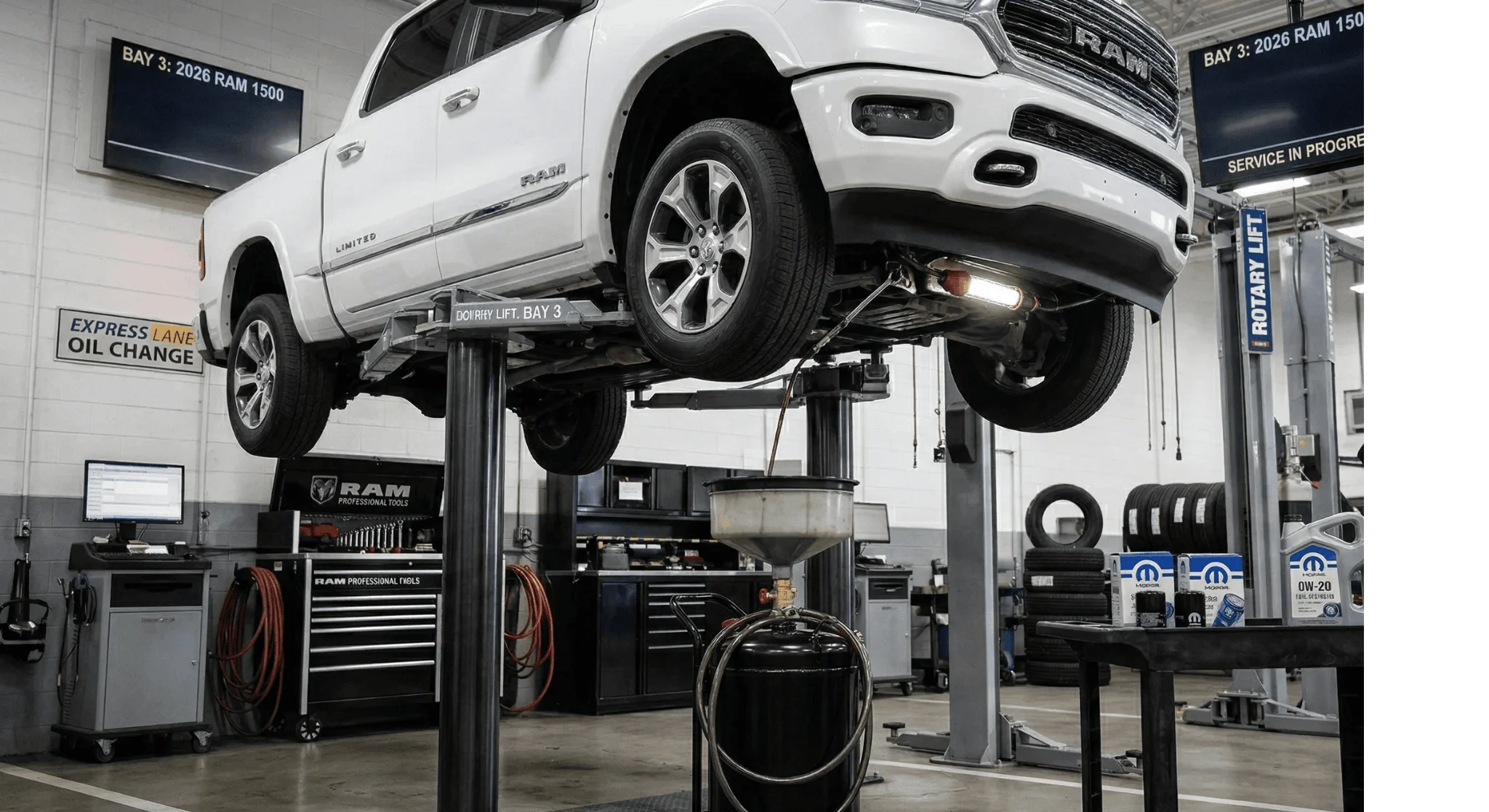
Engine oil quality is critical in summer heat — and particularly important for the Hurricane engine’s twin turbochargers, which generate significant heat and rely on clean oil to protect their high-speed bearings. The correct oil specification depends on your engine variant:
| Engine | Oil Specification | Capacity | Oil Standard |
|---|---|---|---|
| 3.0L Hurricane Standard Output | SAE 0W-20 Full Synthetic | 7.5 quarts | API SP, MS-6395 |
| 3.0L Hurricane High Output | SAE 0W-40 Full Synthetic | 7.5 quarts | API SP, MS-A0921 |
These are different specifications and should not be interchanged. Using the wrong oil viscosity in either engine variant can cause damage and may affect warranty coverage.
Follow the Ram 1500’s Oil Change Indicator System as your primary guide for change intervals. Under normal conditions, do not exceed 10,000 miles or 12 months between changes. If you frequently tow, haul, or drive in extreme heat — common conditions in Ontario and surrounding areas — more frequent changes in the 5,000- to 7,500-mile range help protect turbo components. Allow the engine to reach operating temperature before demanding full power, which ensures oil is circulating properly through the turbo bearings.
Check transmission fluid, power steering fluid, and differential lubricants for proper level and condition to prevent overheating and premature wear.
Belts, Hoses, and Wiper Blades
Summer heat accelerates the degradation of rubber components under the hood. Inspect drive belts and hoses for cracking, blistering, soft spots, or signs of wear — catching a failing belt or hose early prevents roadside breakdowns.
Wiper blades also deteriorate faster in hot climates. The Inland Empire’s intense UV exposure and dust can harden rubber blades and reduce their effectiveness. Inspect wiper blades at the start of summer and replace them if they streak, skip, or show visible cracking. Clear visibility matters year-round, but especially during summer monsoon storms that occasionally sweep through the region.
Exterior and Undercarriage Care
Summer heat combined with road debris and dust can degrade paint and promote corrosion. Wash and wax your Ram 1500 regularly to protect the finish, and inspect underbody shields and components for damage — particularly important for drivers near Claremont, CA, where foothill roads can kick up gravel and debris.
Lighting Systems
Verify the operation of all lighting — headlights, brake lights, and turn signals. Summer often brings increased travel during dawn, dusk, and nighttime hours, and proper lighting ensures visibility and safety on highways and neighborhood streets alike.
Keep Your Ram 1500 Running Strong This Summer
Staying on top of summer maintenance protects your 2026 Ram 1500’s performance and extends its longevity under demanding warm-weather conditions. The service center at Jeep Chrysler Dodge RAM FIAT of Ontario offers factory-trained technicians who understand the Hurricane engine’s specific service requirements — from the correct oil specification for your engine variant to turbo system inspections and air filter replacement.
Or call our service department at 909-321-9772 to book your appointment today.
0 comment(s) so far on Summer Maintenance Checklist for the 2026 Ram 1500